

Vendor Risk Assessment: A Practical Guide for Buyers Sourcing from West Africa
A practical vendor risk assessment framework for buyers sourcing from West Africa — what to check, what to score, and how to document it.

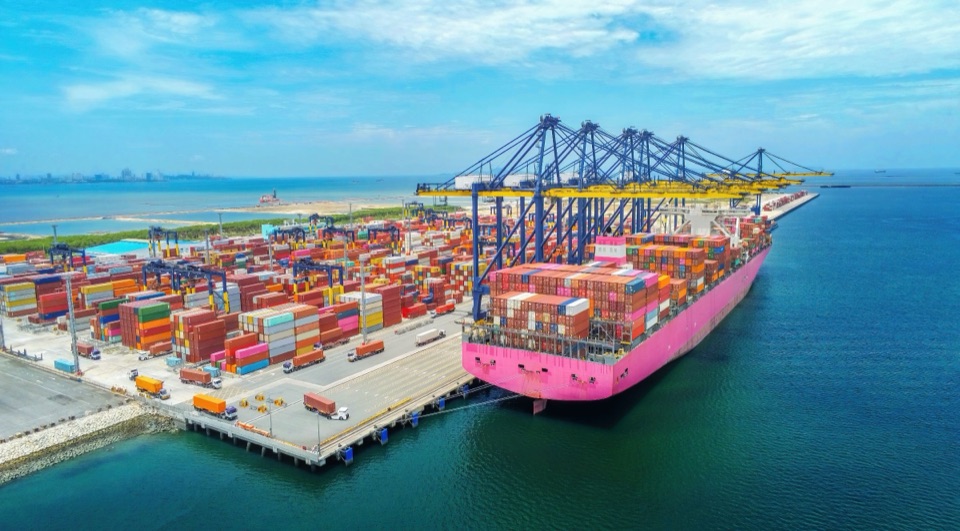
A vendor risk assessment is how a buyer decides whether a new supplier is safe to commit to — before a purchase order gets signed, not after a container is stuck at port. For buyers sourcing cocoa, shea, cashew, textiles or produce from West Africa, the assessment usually gets skipped or rushed, because the supplier seems responsive and the sample looked good. That's exactly when risk gets baked in. This guide walks through a practical, repeatable way to run a vendor risk assessment on a West African supplier, with a worked example and a simple scoring approach you can reuse.
On this page
- Why vendor risk assessment matters for West African sourcing
- What to actually check before you commit
- Building a simple risk score
- Keeping a paper trail: audit trail and compliance tracking
- Worked example: sourcing shea butter from a new cooperative
- Comparison: light-touch vs full vendor risk assessment
- FAQ
Why vendor risk assessment matters for West African sourcing
Buyers who source internationally are increasingly expected to show third party risk management, not just a good relationship with a supplier. A retail buyer, a roaster, or a brand bringing in raw materials from Ghana or its neighbors is on the hook for things the supplier does — labor conditions, traceability, land use, and quality consistency. If a problem surfaces later, the first question an auditor or a customer asks is: what did you check before you placed the order?
A vendor risk assessment is the answer to that question, written down ahead of time. It's not about distrust. It's about knowing which suppliers need close supervision and which ones can be trusted to run with less oversight, and being able to show your own management or customers how you reached that conclusion.
What to actually check before you commit
A useful vendor risk assessment covers five areas. None of these require a lawyer or a big budget — they require someone asking direct questions and checking the answers against documents, not against a sales pitch.
- Business identity. Does the business actually exist as described? Ask for registration documents and a tax identification number, and check the name on an invoice matches the name on the bank account you'll be paying. A mismatch is not automatically a red flag — it might be a family business structure — but it needs an explanation before money moves.
- Capacity vs claim. If a supplier says they can deliver 10 tonnes a month, ask how. Do they own the processing equipment, or do they aggregate from smallholders? Ask to see a production record from the last three months, not a projection for the next twelve.
- Origin and traceability. Can the supplier say where the raw material physically came from — which farms, which district, which season? If the answer is vague, that's a traceability gap that will matter more over time, especially for buyers in markets with tightening origin rules. For the detail on how origin is proven for West African exports, see the AfCFTA rules of origin guide.
- Quality and consistency history. Ask for the results of the last three shipments to any other buyer, including any that were rejected or downgraded. A supplier with no history of this at all isn't disqualified, but should be treated as higher-risk until a track record builds.
- Financial exposure. How much deposit is the supplier asking for, and what happens if the shipment is late or short? A supplier unwilling to discuss partial payment on delivery, or who pushes hard for 100% upfront, is asking the buyer to absorb all the risk.
Building a simple risk score
A risk score doesn't need to be complicated to be useful. A workable approach is to rate each of the five areas above on a simple scale — for example, verified, partially verified, or unverified — and treat any "unverified" rating as something that must be resolved before the first order, not after.
A supplier who scores verified on business identity and capacity but unverified on traceability isn't necessarily rejected. It might mean the first order is small, or that the buyer asks for a farm-level document before scaling up. The point of the score isn't to produce a pass/fail number — it's to make the gaps visible so the buyer can decide what to do about each one deliberately, instead of by accident.
Keeping a paper trail: audit trail and compliance tracking
None of this is worth much if it lives in someone's inbox and gets forgotten by the next buying cycle. A vendor risk assessment should produce a record: who checked what, on what date, against which document, and what was decided. That record is what due diligence software and compliance tracking software exist to hold — a running history rather than a one-off email thread.
This matters even more when the supplier relationship continues for years. A new category manager should be able to open the file and see the full history of a vendor, not start from zero. For a closer look at what this kind of audit trail software actually needs to do for a buyer sourcing from West Africa, see the buyer's guide to audit trail software, and for why a logged, timestamped record beats a certificate emailed as a PDF, see audit trail vs emailed certificates.
Worked example: sourcing shea butter from a new cooperative
A buyer named Jonas runs sourcing for a mid-size cosmetics brand in the Netherlands. He's been offered a new shea butter supplier in northern Ghana — a women's cooperative introduced by an existing supplier, offering a better price than his current source.
Jonas starts with the registration check. The cooperative sends a certificate of registration and a tax number, both of which match the name on the quote. First box checked.
Next he asks about capacity. The cooperative's contact tells him they can deliver two tonnes a month, sourced from around 40 member farmers across three communities. Jonas asks for a simple list — community name, approximate number of farmers, and the harvest month for each. The cooperative sends it within a week. That's a reasonable traceability answer for a first order, even without a formal farm-mapping system yet.
Then Jonas asks about history. The cooperative has sold to one other European buyer before, a smaller order, with no rejections. Jonas asks that buyer directly for a short reference — did the shipment arrive on time, was the quality consistent with the sample. The reference confirms it did, with one note: the second shipment was two weeks late because of road conditions in the rainy season.
On payment, the cooperative asks for 50% deposit and 50% on delivery, which Jonas considers standard and not a red flag.
Jonas's risk assessment ends up with: business identity verified, capacity partially verified (claim matches a believable structure but no production record yet), traceability partially verified (community-level, not farm-level), quality history verified with one logistics caveat, financial terms reasonable. His decision: place a small first order — half of what the cooperative's full claimed capacity would allow — and build the farm-level traceability requirement into the contract for the second order. He logs all of this, with dates and the documents received, in his compliance tracking system, so the next person who touches this account inherits the context instead of starting over.
Comparison: light-touch vs full vendor risk assessment
| Factor | Light-touch check | Full vendor risk assessment |
|---|---|---|
| Business identity | Name on invoice matches name on quote | Registration documents and tax ID checked against bank account name |
| Capacity | Verbal claim taken at face value | Production record or aggregation structure requested and reviewed |
| Traceability | Country or region of origin stated | Farm or community-level origin documented, mapped to shipment |
| Quality history | Sample reviewed once | Reference from a prior buyer, history of rejections checked |
| Record keeping | Email thread, no structured log | Dated entries in an audit trail or compliance tracking system |
| Best suited to | Small, low-value trial orders with an existing, trusted introducer | New suppliers, larger volumes, or categories under tightening origin or labor scrutiny |
Frequently asked questions
What's the difference between a vendor risk assessment and a one-time supplier check?
A one-time check answers whether this supplier looks okay today. A vendor risk assessment is a repeatable process with a written record, so the next order — and the next person handling the account — can build on what was already verified instead of starting from scratch.
Do I need software to do this, or can I run it on a spreadsheet?
A spreadsheet works for a handful of suppliers. It gets harder to trust once you're tracking dozens of vendors, multiple document versions, and who approved what. That's the point where due diligence software or compliance tracking software starts paying for itself, mainly by making the history searchable and hard to lose.
How do I handle a supplier who refuses to share documents?
Treat refusal as data. A supplier unwilling to share basic registration or production records isn't automatically dishonest, but it means the buyer is taking on more unverified risk, and the order size or payment terms should reflect that until trust is built.
How often should a vendor risk assessment be repeated?
A sensible rule is to repeat the core checks whenever something material changes — a large increase in order volume, a new product line, a change in ownership or management at the supplier, or a gap of a year or more since the last review.
Does a good first shipment mean the risk assessment is done?
No — a good first shipment confirms one data point. Capacity, traceability and quality all need to hold up over several cycles, especially across a harvest season or a change in weather, before a supplier should be treated as low-risk.
Running a vendor risk assessment on every new West African supplier, in writing, with dates and documents attached, turns sourcing decisions into something you can defend later — to your own management, to a customer, or to an auditor. Start with the five checks above on your next new supplier, log what you find, and build from there.