

CFR Incoterms Definition for West African Exporters
CFR Incoterms definition explained for Ghana-based exporters: what it covers, who pays for what, and when CFR beats FOB or CIF.

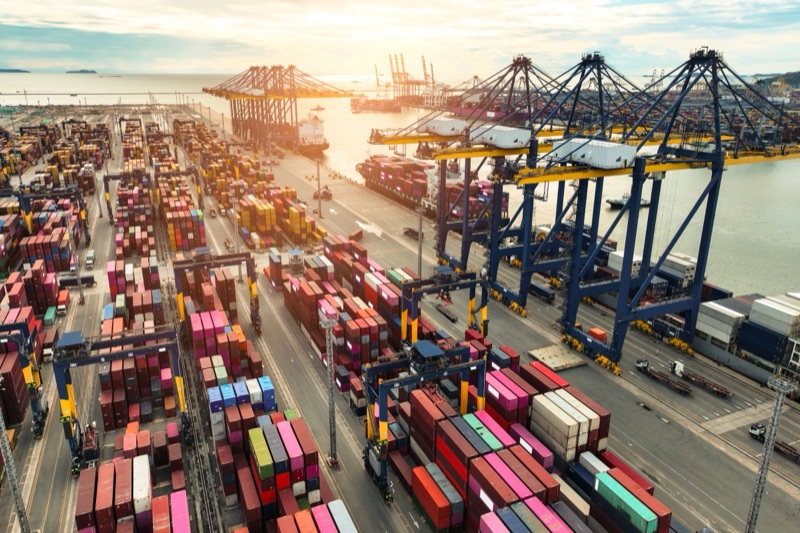
CFR (Cost and Freight) means the exporter pays to get the goods onto the ship and covers ocean freight to the named port of destination, but risk passes to the buyer the moment the goods are loaded on board at the port of departure. The buyer arranges and pays for marine insurance. It is a sea-and-inland-waterway-only term, which matters a lot if you are shipping cocoa, cashew or shea from a West African port rather than by air.
For exporters used to FOB, CFR is a small step up: you take on one more cost (freight) but not the risk of loss in transit. For buyers, CFR is attractive because the landed freight cost is already fixed in the seller's price, even though they still have to sort their own insurance.
On this page
What does CFR actually mean?
CFR means the seller's quoted price already includes the cost of moving the goods to the port, loading them, and paying ocean freight to the destination port named in the contract — for example CFR Rotterdam or CFR Hamburg. Risk, however, transfers to the buyer at the moment the goods pass the ship's rail at the loading port, not when they arrive. That split — seller pays freight, buyer carries risk from loading onward — is the part exporters most often get wrong when they first quote CFR, because it feels like the seller is responsible for the whole voyage when they are only responsible for the cost of it.
CFR replaced the older term C&F in common usage, and the two mean the same thing in practice. Under Incoterms rules, CFR sits in the group of sea-and-inland-waterway terms alongside FOB and CIF, and it cannot be used for air, rail or multimodal shipments where the carrier doesn't load cargo over a ship's rail.
Who pays for what under CFR?
Under CFR, the exporter pays export packing, inland transport to the port, export customs clearance, loading charges, and ocean freight to the named destination port. The buyer pays import duties, import customs clearance, unloading charges at destination (unless already included in the freight), and — importantly — marine insurance for the voyage.
That last point is the one buyers sometimes miss. Because CFR does not include insurance, a buyer who doesn't arrange their own cover has no protection if the container is lost or damaged after loading, even though the exporter was still paying for freight at that point. This is the main practical difference from CIF, where the seller buys at least minimum cover on the buyer's behalf.
This split also decides when you get paid if you're working on a letter of credit or documentary collection: the bill of lading showing goods on board is normally the trigger document, so CFR terms line up well with incoterms and payment terms that release funds against shipping documents rather than against arrival.
CFR vs FOB vs CIF: which should you quote?
Quote FOB when the buyer wants to control freight booking and insurance themselves; quote CFR when the buyer wants a landed freight price but is happy to insure the cargo themselves; quote CIF when the buyer wants the simplest possible all-in number, freight and basic insurance included. A full side-by-side of these three, with worked numbers for a Ghanaian exporter, is in the guide on FOB vs CIF vs EXW: which Incoterm for a Ghanaian exporter.
CFR tends to come up when a buyer's finance team wants a fixed freight-inclusive price for budgeting but their own insurance broker already covers all incoming cargo under a blanket policy, so paying the seller to add insurance again would be wasted cost. If that's not the case, and the buyer has no existing cover, CIF is usually the easier sell since it removes one more thing for them to arrange.
Can you use CFR for air freight?
No. CFR only works for sea and inland waterway transport, because it is defined around goods passing over a ship's rail at a loading port. If you're shipping by air, the incoterm for air freight is CPT (Carriage Paid To) or, if you want insurance included too, CIP (Carriage and Insurance Paid To). The CPT incoterms meaning is close to CFR's logic — seller pays carriage to a named place, risk transfers when goods are handed to the first carrier — but CPT applies to any mode of transport, including air, rail, road or multimodal, which makes it the right substitute when a shipment isn't going by sea.
CFR vs CPT at a glance
| Feature | CFR | CPT |
|---|---|---|
| Transport mode | Sea and inland waterway only | Any mode, including air and multimodal |
| Risk transfer point | When goods pass the ship's rail at the port of loading | When goods are handed to the first carrier |
| Insurance | Buyer arranges their own | Buyer arranges their own |
| Named point in contract | Named port of destination | Named place of destination |
| Typical West African use | Container or bulk cocoa, cashew, shea by sea | Smaller, higher-value or time-sensitive goods by air |
Decision table: CFR or something else?
Use this to match the shipment to the right term before you quote.
| Situation | Term to quote | Why |
|---|---|---|
| Buyer has a standing marine insurance policy and wants freight pre-paid | CFR | Avoids paying twice for cover the buyer already has |
| Buyer has no insurance arrangement and wants one simple number | CIF | Seller adds minimum cover, buyer has nothing else to arrange |
| Buyer wants to choose and book their own shipping line | FOB | Buyer controls freight contract and cost from the port of loading |
| Shipment is going by air, not sea | CPT or CIP | CFR cannot be used off a ship's rail; CPT/CIP cover any transport mode |
| Buyer wants goods delivered and cleared at their own warehouse | DAP or DDP | Seller takes on inland delivery and, under DDP, import duty too |
What a CFR quote needs to include
A CFR quote is only useful to a buyer if it names the destination port and states clearly that insurance is excluded. Before sending one, check these five things.
- Named destination port is specific — write CFR Antwerp or CFR Hamburg, not just CFR Europe.
- Freight cost quoted is the actual booked or quoted ocean rate for the container size and route, not an estimate from a previous shipment.
- Quote states in writing that insurance is excluded and is the buyer's responsibility from the port of loading onward.
- Export documentation costs (certificate of origin, phytosanitary certificate where relevant, export permit) are built into the price, not added afterward.
- Payment trigger is agreed — most CFR deals release payment against a clean bill of lading showing goods on board, so confirm this matches the buyer's letter of credit or payment instructions before shipping.
Frequently asked questions
What is Ex Works incoterms, and how does it differ from CFR?
Ex Works (EXW) means the seller only has to make the goods available at their own premises — the buyer arranges and pays for everything from collection onward, including export clearance. CFR puts far more on the seller: export clearance, inland transport, loading, and ocean freight to the destination port. EXW shifts almost all cost and risk to the buyer from day one; CFR shifts only risk early, while the seller still carries the freight cost.
What does incoterm DAP mean, and would it suit a West African exporter better than CFR?
DAP (Delivered at Place) means the seller is responsible for getting the goods all the way to a named destination, ready for unloading, though the buyer still handles import clearance and duty. It suits exporters who can manage inland delivery in the destination country, usually through a freight forwarder with local reach. CFR is simpler for most West African shippers because the seller's responsibility ends at the port of loading rather than continuing to the buyer's door.
What does DDP incoterms mean compared to CFR?
DDP (Delivered Duty Paid) puts almost everything on the seller, including import duty and taxes in the buyer's country — the opposite end of the scale from CFR, where the seller's job stops once goods are loaded and freight is paid. DDP is rarely practical for a West African exporter without a customs presence or agent in the buyer's country, since it means handling foreign import duty directly.
What happens if the ship is delayed or cargo is damaged after loading under CFR?
Once goods pass the ship's rail at the port of loading, the risk is the buyer's, not the seller's. If the vessel is delayed or the cargo is damaged at sea, the exporter has already met their obligation by loading the goods and paying freight — the buyer's recourse is through their own marine insurance, not a claim against the exporter. This is exactly why a CFR contract should confirm the buyer has cover in place before the vessel sails.
Does CFR affect when the exporter gets paid?
Indirectly, yes. Because risk and the seller's main obligation end at loading, CFR deals commonly use the bill of lading as the document that triggers payment under a letter of credit or documentary collection. That makes incoterms and payment terms closely linked under CFR: agree upfront which shipping document releases funds, so there's no dispute once the vessel has sailed.