

Commercial Invoice Export Explained for Ghanaian Exporters
What a commercial invoice export document is, why customs uses it, and where it sits in the Ghana export process. Plain-English guide with a worked example.

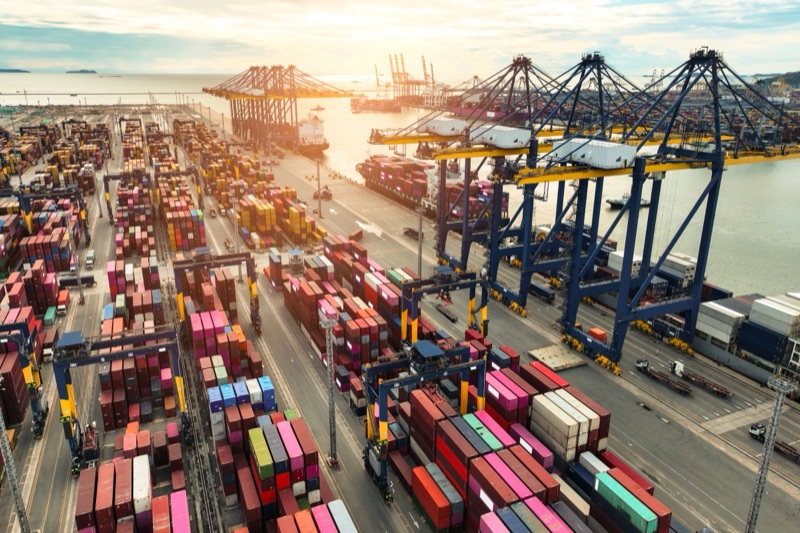
A commercial invoice export document is the bill of sale a Ghanaian exporter issues to a foreign buyer. It lists what was sold, at what price, in what quantity, and on what terms. Customs officers on both ends of the shipment use it to work out duties and to check that what's declared matches what's actually moving. If you're shipping cocoa, shea, or cashew out of Tema or Takoradi, this is one of the first documents a buyer or freight forwarder will ask you for.
This guide walks through what the commercial invoice does, where it sits alongside the rest of your export paperwork, a worked example with real invoice fields, and a comparison with the proforma invoice — a document exporters often confuse it with.
On this page
Why customs relies on the commercial invoice
The trade.gov export documents guide states that customs authorities use the commercial invoice as one of the main documents for determining customs duties [trade.gov]. That means the figures you put on it — unit price, total value, currency, quantity — directly shape what the buyer's customs office charges on arrival.
The same guide notes that governments which use the commercial invoice to control imports will often specify its form, content, number of copies, and language [trade.gov]. In practice this means a buyer in France may expect different detail or layout than a buyer in the United States, so it's worth confirming the destination country's expectations with your buyer or freight forwarder before you finalize the invoice, rather than assuming one template fits every market.
Where it fits in the Ghana export process
Before a commercial invoice means anything to Ghanaian customs, the exporter issuing it needs to exist on paper as a registered exporting company. GEPA's export procedures page lists registering with the Ghana Export Promotion Authority — using the GEPA Registration Form along with photocopies of registered business certificates — as step 2 of its export procedure [GEPA]. The commercial invoice itself comes later, once a buyer has agreed to purchase and the shipment is being prepared, but the registration step is what allows the exporter's name on that invoice to match an entity customs and GEPA both recognize.
If the goods also need to qualify for preferential tariff treatment under the AfCFTA, that's assessed separately through rules of origin documentation, which looks at where inputs came from and how much local processing happened — not at the sale price or payment terms that the commercial invoice covers.
Common mistakes exporters make
A few recurring problems show up on commercial invoices that cause delays at the destination port:
- Value mismatch against the letter of credit. If a buyer is paying through a letter of credit, the invoice value, currency, and goods description must match that document exactly. A rounding difference or a different spelling of the product name can get the invoice rejected by the paying bank before it even reaches customs.
- Missing or wrong Incoterm. An invoice that doesn't state whether the price is FOB, CIF, or another term leaves the buyer's customs broker guessing who paid for freight and insurance — which changes the dutiable value.
- Under-invoicing. Declaring a lower price than what was actually paid, to reduce duty, is a common temptation but it creates a paper trail that doesn't match the buyer's actual payment, and mismatched records are exactly what customs audits are built to catch.
- Currency and unit inconsistency. Quoting price per kilogram in one section and per bag in another, or mixing cedi and dollar figures without clearly labeling which is which, forces the receiving customs office to query the shipment rather than clear it on schedule.
Worked example: a cocoa shipment invoice
Picture a Kumasi-based cocoa exporter who has registered with GEPA using the GEPA Registration Form and photocopies of its business certificates, as GEPA's step 2 requires [GEPA]. A European buyer agrees to purchase cocoa beans, and the exporter now has to prepare the commercial invoice before the beans can leave port.
The invoice the exporter draws up includes: the buyer and seller's full registered names and addresses; an invoice number and date; a description of the goods ('cocoa beans, grade I'); the HS code for cocoa beans; quantity (say, 500 bags); unit price per bag in the agreed currency; total invoice value; the Incoterm (for example, FOB Tema); and payment terms. Because customs on the receiving end will use this invoice to determine duties [trade.gov], every figure has to tie back to what was actually agreed and paid — a unit price that doesn't match the buyer's purchase order is the kind of mismatch that gets a shipment held for review rather than cleared.
If this same shipment is also meant to qualify for a preferential tariff rate under the AfCFTA, the exporter separately prepares the rules of origin paperwork, since that's a distinct check from anything on the commercial invoice.
Commercial invoice vs proforma invoice
| Feature | Commercial invoice | Proforma invoice |
|---|---|---|
| When it's issued | After the sale is agreed, for the actual shipment | Before the sale is finalized, as a quote or offer |
| Used by customs for duty assessment | Yes — customs authorities use it as one of the main documents for determining duties [trade.gov] | No — it's not the document customs relies on for duty assessment |
| Legal standing | Evidence of an actual sale and payment obligation | Not a demand for payment; more like a detailed quotation |
| Format expectations | Destination governments often specify form, content, copies, and language [trade.gov] | Generally more flexible since it isn't the customs-facing document |
Frequently asked questions
Proforma invoice vs commercial invoice — what's the real difference for an exporter?
A proforma invoice is sent before the deal is locked in — it's essentially a detailed quote the buyer can use to arrange financing or an import permit. The commercial invoice comes after, once goods are actually shipped, and it's the document customs authorities use as one of the main documents for determining customs duties [trade.gov]. If you send a proforma with placeholder figures and then issue a commercial invoice with different values, that mismatch is one of the things that can trigger a customs query.
Do I need to be registered with GEPA before I can issue a commercial invoice?
GEPA's export procedures place registering as an exporting company, using the GEPA Registration Form with photocopies of registered business certificates, as step 2 of the export procedure [GEPA]. A commercial invoice issued by a business that isn't registered as an exporter can raise questions when customs or a bank tries to verify who's selling the goods, so this is worth sorting out before you're negotiating with buyers, not after.
What happens if my commercial invoice doesn't match the destination country's expected format?
Destination governments that use the commercial invoice to control imports will often specify its form, content, number of copies, and language [trade.gov]. An invoice that's missing a required field or isn't in the expected language can sit with customs while they request a corrected version, which pushes back the date the buyer actually receives the goods. Confirming format expectations with your buyer or freight forwarder before shipping is the practical fix.
If my cocoa qualifies for AfCFTA preferential tariffs, does that replace the commercial invoice?
No. AfCFTA rules of origin documentation is a separate check on where the goods and their inputs came from — it doesn't replace the commercial invoice, which customs still uses to assess value and duties [trade.gov]. You'd typically prepare both documents for the same shipment if you're claiming preferential treatment.
How do buyers verify that the commercial invoice I sent is genuine and hasn't been altered?
That's less about the invoice format and more about how it's delivered and tracked. A buyer sourcing from West Africa may ask for invoices through a system with a verifiable record rather than a plain email attachment — see the comparison in audit trail vs emailed certificates for how that distinction plays out in practice.
Sources
- GEPA — Export Procedures (opens in a new tab)Reviewed as of 13.11.2026
- trade.gov — Common Export Documents (opens in a new tab)Reviewed as of 07.11.2026
Next step
Getting your export documents organized before a buyer asks for them saves time once a shipment is ready to move. If you're putting together a full export paperwork setup, check how registration, origin documents, and invoices fit together across the guides linked above.