
FCA Incoterm Explained for Ghanaian Exporters
What the FCA incoterm means for Ghanaian exporters, who handles export clearance, and how it compares to CPT and DDP terms.


If a buyer sends you a contract quoting the FCA incoterm, it sets the point where your responsibility for the goods ends and the buyer's begins. For a Ghanaian exporter shipping cocoa, shea, or textiles out of Tema or Takoradi, that handover point usually means a container terminal rather than the ship's rail. This guide walks through what FCA requires, how it plays out for a container booking, and how it compares to CPT and DDP terms you might also see in buyer paperwork.
On this page
What FCA Means in Practice
FCA stands for Free Carrier. Under this rule, the seller delivers the goods to the carrier or person the buyer has nominated, at an agreed place and point.[1] That place could be the seller's own premises, a freight forwarder's depot, or a container terminal — whatever the contract specifies.
Once the goods reach that point and are handed over, the seller's delivery obligation is done. Everything that happens to the goods after that — loss, damage, delay on the vessel — is the buyer's risk to carry, not the seller's.
What the Seller Must Do
The seller arranges export clearance. That holds no matter which delivery scenario applies under FCA — whether handover happens at the seller's warehouse or at a terminal gate.[2] This includes sorting out any preferential tariff documentation the buyer is relying on, such as proof of origin under a scheme like AfCFTA rules of origin. That paperwork needs to be settled before or at the point of handover, not after.
Beyond clearance, the seller's job is to get the goods to the nominated point in a state ready for the carrier to take charge — packed, labelled, and matching the contract description. Nothing about FCA requires the seller to pay for the main carriage or insurance; that cost sits with the buyer once risk transfers.
Why FCA Suits Container Shipments
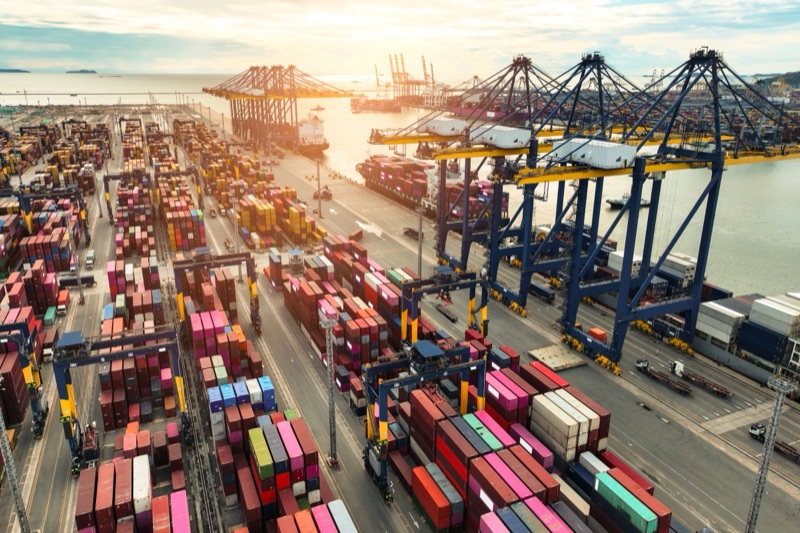
For cargo that moves in containers, delivery rarely happens alongside or on board a ship — it happens at a container terminal, once the box is handed to the carrier's custody. The ICC Academy points out that this is exactly the scenario FCA was built for, and recommends it over on-board delivery rules for containerised freight.[3] If your cocoa or shea shipment is leaving Tema in a sealed container booked by the buyer's forwarder, FCA matches that reality more closely than a rule written around loading cargo directly onto a vessel.
Worked Example: A Container Booking from Tema
A Ghanaian shea butter exporter agrees to sell on FCA terms, with the nominated point set as a container terminal in Tema. The buyer's forwarder books a container and tells the exporter which trucking company will collect it.
The exporter packs the shea butter, completes export clearance, and delivers the goods to that trucking company at the terminal gate.[2] From that moment, the goods are in the carrier's custody and risk has passed to the buyer — the exporter is no longer on the hook for what happens to the container once it's inside the terminal.
Say the container sits at the terminal for a while before the vessel arrives, and when it's eventually opened at destination, part of the shipment shows damage. The question that gets asked first isn't about the shipping line's handling procedures — it's simpler: did the damage happen before or after the goods were handed over to the carrier at the terminal gate? If handover is documented properly, that single fact settles who carries the loss.
This is also why the handover paperwork matters. A clear, timestamped proof of delivery to the carrier at the terminal is what separates a straightforward claim from a drawn-out dispute later.
FCA vs CPT vs DDP
| Incoterm | Where risk transfers | Who arranges export clearance | Who pays main carriage |
|---|---|---|---|
| FCA (Free Carrier) | At the nominated point, once goods are handed to the buyer's carrier | Seller[2] | Buyer |
| CPT (Carriage Paid To) | At the point goods are handed to the first carrier | Seller | Seller (pays freight, but risk still passes early) |
| DDP (Delivered Duty Paid) | At the buyer's named destination | Seller, including import clearance at destination | Seller |
The practical difference between FCA and CPT is cost allocation, not risk timing — in both, the seller's risk ends early, but under CPT the seller also pays the freight bill. DDP sits at the opposite end: the seller carries both cost and risk all the way to the buyer's door, including import formalities.
Frequently asked questions
Who pays for export clearance under FCA?
The seller does. This holds regardless of whether the nominated delivery point is the seller's own premises or a terminal gate.[2]
Is FCA the same as FOB?
No. FOB is built around delivery on board a vessel, which doesn't fit container cargo well. FCA instead lets the parties nominate a point such as a container terminal, matching how containerised freight is actually handed over.[3]
How does FCA affect documents like certificates of origin?
If the buyer is claiming preferential tariff treatment, for example under AfCFTA rules of origin, that documentation still needs to be in order at the point of handover — FCA doesn't shift who is responsible for preparing it.
What's the difference between FCA and CPT incoterm?
Both transfer risk when goods reach the first carrier. The difference is who pays freight: under CPT the seller pays to move the goods to the agreed destination, while under FCA the buyer arranges and pays for carriage from the nominated point onward.
When would a buyer ask for DDP incoterm instead of FCA?
DDP shifts far more onto the seller — carriage, risk, and import clearance all the way to the buyer's door. A buyer might ask for it when they want to avoid handling customs formalities at destination themselves, but it means the seller is carrying cost and risk for the whole journey rather than handing off early at a terminal.
Sources
- ICC Academy — Incoterms 2020: EXW or FCA? (opens in a new tab)Reviewed as of 12.11.2026
- ICC Academy — Incoterms 2020: FCA or FOB? (opens in a new tab)Reviewed as of 12.11.2026
- ICC Academy — Incoterms 2020: FAS or FOB? (opens in a new tab)Reviewed as of 06.11.2026